Three years ago, I lost a $47,000 contract for not being able to answer one question: “What is your environmental certification status?”
I sat there, in that conference room, coffee going cold, watching the opportunity just walk out the door. They were a mid-size tech company who had recently made company-wide sustainability mandates. They didn’t care that I had been printing their marketing materials for six years, that my turnaround times were quick, or that I was the lowest price.
They cared what their stakeholders would say when they saw “printed by” in their annual report. I took it on the chin, and the experience changed the way I run my business.
The High Cost of Ignoring Green Printing
Look, let me cut to the chase: sustainable printing is not about some tree-hugging idealism. It’s about your bottom line. Your dollars. Here’s what I’ve seen since that disaster in the conference room.
The portion of corporate print jobs I’m asked for these days, where sustainability is a factor, is probably in the 60-70% range. I’m not precise on the exact numbers – they shift by industry and region – but I can definitively say it is no longer the minority approach. In other words, when you neglect eco-friendly options, you are not just forfeiting potential warm fuzzies; you’re actively pruning your prospective client list.
I literally don’t see an RFP that doesn’t have a dedicated section on sustainability these days. The initial costs had me scared, to be frank. The prices of FSC-certified paper alone seemed prohibitive. Soy-based inks had unique handling requirements, and the actual certification of my shop was going to require a considerable time investment.
But here’s what I learned that no one told me upfront: big, stable, high-margin clients have a vested interest in sustainability and are generally less sensitive to slight cost increases on any given job. They aren’t going to compare your quotes against the cheapest, fastest online print shop. They want partners who share their vision.
So what really moves the needle?
Start small. Don’t try to make a holistic shift at your operation overnight, and don’t try to lead with some ambitious certification plan. Paper is paramount.
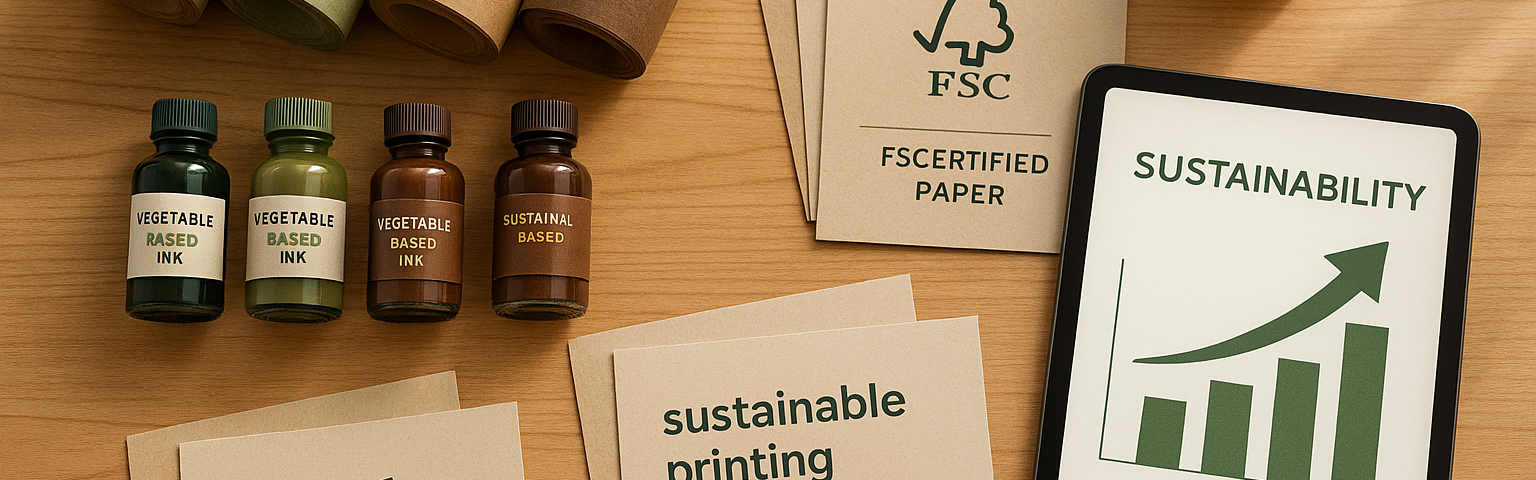
This is, after all, the part clients will be the first to investigate; they’ll look at recycled content percentages, FSC certifications, chlorine-free options, or the lack thereof. The moment I shifted my standard stock to 30% post-consumer recycled, my pricing didn’t change – the cost increase per ream was nominal on a volume basis, but the marketability was enormous.
Ink is the stealth weapon: If you are using veggie-based inks, they reduce VOC emissions, which not only makes your office healthier for staff (and easier to breathe) but may even eventually impact your insurance premiums. And no, the vibrancy isn’t compromised like it was 10 years ago; the technology is there now.
Waste reduction: this is where I saw the most surprising immediate savings. When I began actually calculating paper waste in my shop – not for the sake of the environment, but for the sake of cutting costs – I realized we were tossing nearly 12% of the total paper that came in through misprints, overruns, and test runs. Slimming this waste down will pay for certification within 18 months.
I will stake this to the masthead: printers who dismiss environmental concerns as a fad or a “trend” are going to be largely extinct in five years, probably sooner. The market has changed, and this is not a temporary phase.
Making It Work For Smaller Shops
Look, I get it. If you’re a smaller outfit, all of this might sound a little overwhelming. There’s no need to overhaul the entire operation at once; instead, pick a product line or a category you want to specialize in. Your business cards, or maybe flyers and brochures?
Contact your paper supplier and see what eco-friendly alternatives are available. Run trials, get some quotes, and market that option to clients that show interest in it. One surprisingly robust market seems to be real estate/property development, and ironically the more high-end developers want the luxury branding and high impact while maintaining stringent sustainability requirements; I’ve even worked on projects for developers such as kl360.co with the explicit requirement of sustainable sourcing and production.
Make sure you are documenting everything you do. As you implement changes and take steps toward a more environmentally-responsible business operation, keep a record of it. Clients want to see you are making an effort; they don’t need to see perfection from day one.
Depending on the size and type of your operation, official certifications such as FSC Chain of Custody will take anywhere from three to six months to complete. It’s going to involve paperwork, site audits, and frankly, a certain amount of hassle, but once you secure that credential, the door it opens may surprise you – not just in new sales opportunities but in brand perception and employee pride.