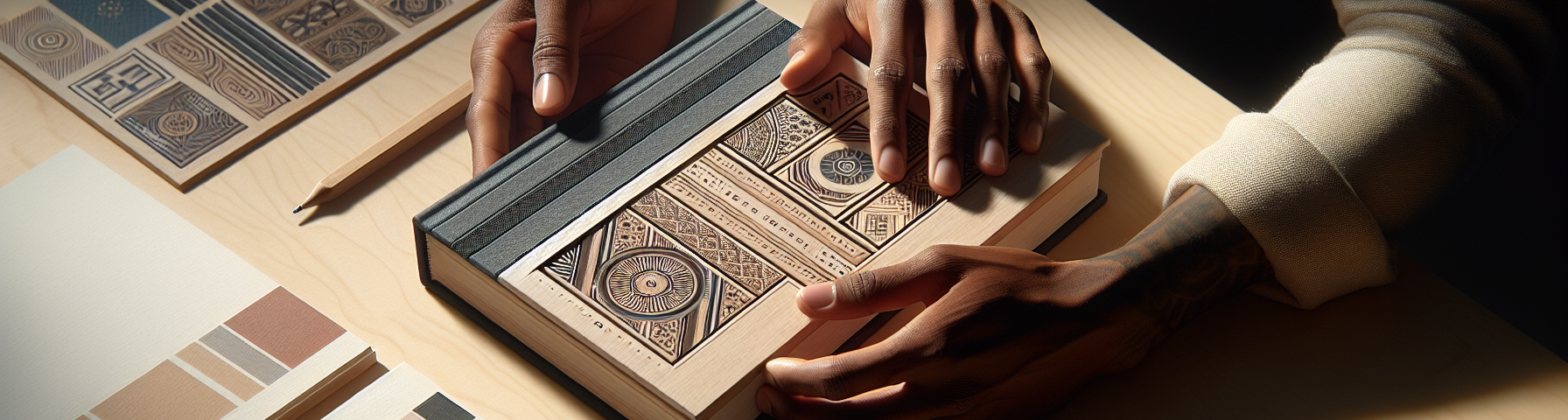
Does my book cover really matter that much if my content is solid?
I get asked this twice a week for first-time authors. Usually this is said with a little bit of defensiveness—it’s pretty clear the author already knows the answer but they don’t want to hear it. So here is the cold hard truth that, after fifteen years and more than a few failed projects, I finally accepted: your cover matters more than your content.
No, I know this hurts. It hurt when I realized it too. People decide before they decide.
A Real Example
Here is something I learned early on that surprised me: We published a business book that had truly revolutionary content—the kind of material that could change industry standards and thought processes. The author was brilliant, the writing was articulate, and our cover was “professional and clean,” a.k.a “boring.” In its first year it sold about 2,000 copies. Two years later a different publisher acquired the rights, slapped on a new cover that was visually arresting, used a fresh color scheme that shifted the book entirely in terms of tone and content, but used exactly the same interior.
They sold 40,000 copies in six months. Same words on the page. Different packaging.
That fact cracked my eyes wide open about the nature of meritocracy in the world of publishing. But it also showed me what actually happens neurologically when someone encounters a book. The human brain processes images in 13 milliseconds—faster than you can think.
So when people are ostensibly “deciding” for real whether to pick up a book, their limbic system has already made its choice. The cover is packaging. It’s the promise.
Your Cover is a Contract
And here is the stance I will take to the grave. A cover is not decoration, and to think of it that way is professional malpractice. Your cover is psychologically speaking a contract with your reader.
It says “this is the kind of experience you’re about to have, this is the person you’ll become by turning these pages, this is the tribe you’ll join.” Consider it. When you see a thriller with jagged fonts and a shadowy figure in front of an alley way, your brain slaps them into the “dark” genre. When you see a business book with a bright catchy single word title, lots of white space, and a basic font your brain has anticipated that voice of authority in the title.
When you see a memoir with a memento photo and a handwriting font you expect to read about intimacy and sensitivity. These responses are not chance. They have been established over generations of consumer culture exposure and your reader unconsciously absorbs this input within milliseconds and understands it without thinking.
The Statistics
Amateur book covers announce amateur content, even when it is unfair. I’m not quite sure of the number here as the process varies wildly depending on whose research paper you’ve read, but somewhere around 70-80% of people’s purchasing decisions are decided by the cover. Some even go as high as 90% when browsing online, where often the cover is a tab that simply blends in with dozens of others.
And what I do know for certain is this: amateur quality covers are met with sophisticated detection machines. Your reader can’t explain it exactly but they will look for signals that the design is amateur—an amateurish lack of typography, imbalance, too much of some kind of aspect, a lack of thought behind the composition—and then categorize the writing to be amateur too. Perfectly polished book-only content lauded—and the reader still dismisses it without a second glance.
My Advice
Study your genre ad nauseam before you do anything. Study the bestsellers. What is represented on the covers?
- How big are the typefaces?
- Is there a common color scheme?
- Is there a common style of photography?
Save this info not with a copy of your copy but with the brain you’d like to do a little selling for. If all your equivalents are using clean white space and bold borderless fonts then you better have a very sound reason for not doing the same. For a serious investment into creating a professional-looking cover.
Testing Your Cover
Have the designer create thumbnails of your mock up—the tiny size on a screen. If the font for your title becomes unrecognizably small don’t expect a buying reader to get it either. Have a reason if the colors you selected are not already ubiquitous in your genre.
Test it using thumbnails and see if it pops and stands out or melts in with the other covers. The font is okay, all the text can be read, the balance is even, the thumbnail keeps it clean and improves it—we’re good to go. I want a different reason that has nothing to do with what you personally think about your cover.
If the worst thing you can say about your cover is “it doesn’t feel right to me” then I think you need a new designer. Your customer is not the author—I mean you in context of the author. Customers want your book to be amazing just as bad as you do, they just have a different aesthetic and need to see a cover that signals this is what you’re delivering.
The Harshest Truth
And here is the harshest truth of all, published to be published: books with bad covers seem amateur and people assume the writing is bad, and therefore ignore the book entirely. You could have the best possible flawless and perfectly professional manuscript but if the cover decided it was amateur then it will be ignored. And your only chance to make someone stop dead in their scroll or grab your book off the shelf and bring it to a rest in their hand is to have the right cover for your reader.
Imagine that as much of a commission as the text of the inside. This is the largest marketing decision you will ever have to make regarding your book. Treat it accordingly.